Cool Small Drawings With Highlighters
Markers: a buying guide
In this guide to ownership markers, I'll explicate everything you need to know so that you tin can confidently buy the markers that will work best for your artistic needs! I'll cover things similar tip shape, blending, brands, costs and the important differences between water-based and alcohol-based markers. I'll finish up with my recommendations for the best markers you can buy.
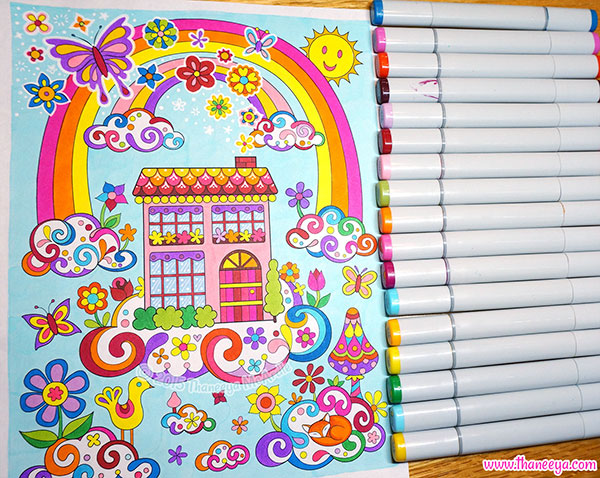
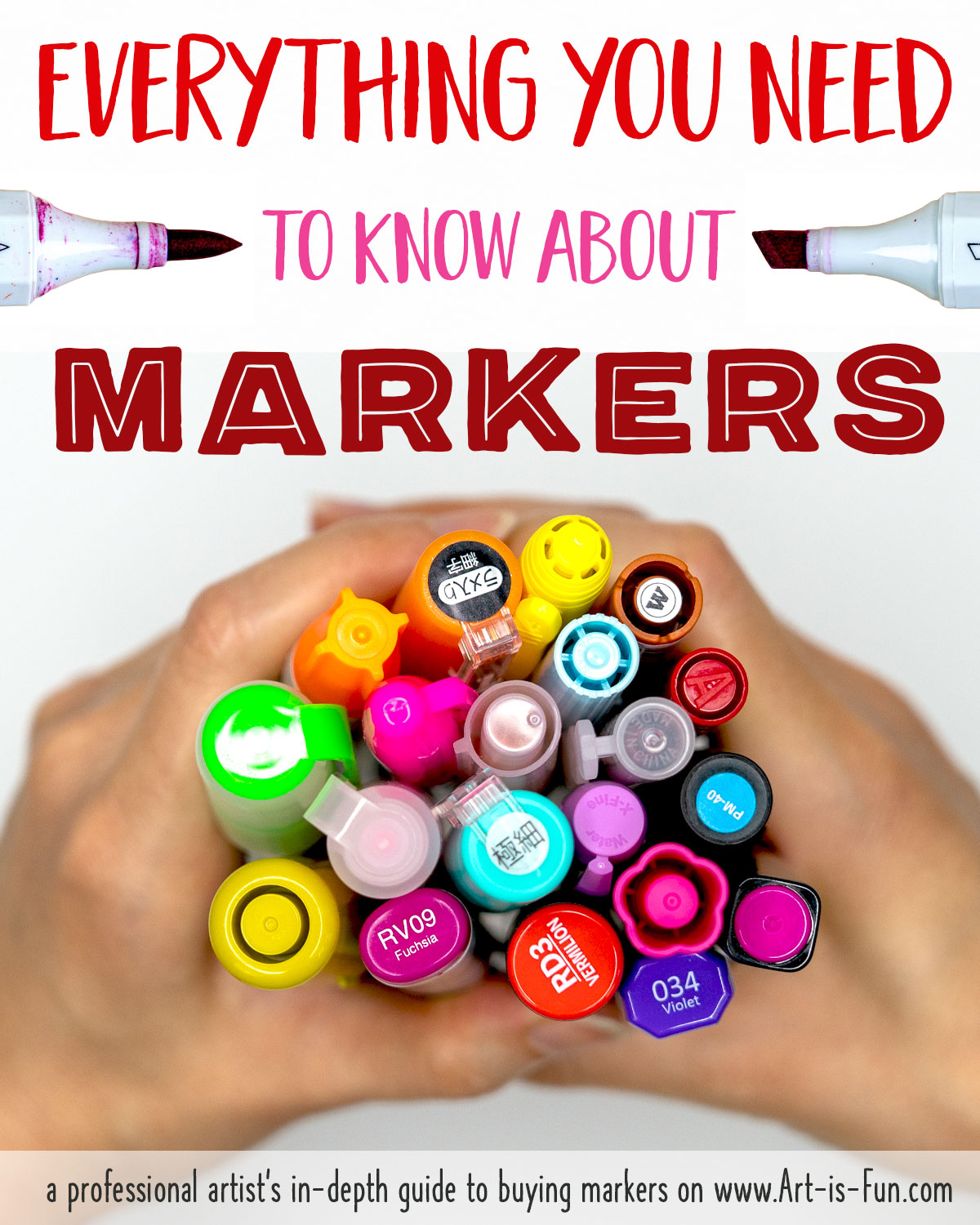
Since 2014 I've published 23 coloring books (selling over 3.5 1000000 copies) and as a effect, I've done a lot of a of illustrating and experimenting with markers - amassing a collection of 600+ markers from over a dozen unlike brands! You can see just a fraction of my collection in the pic below. In this Intro to Markers Guide I'll laissez passer on everything I've learned, so read on to find out which markers will be best for y'all!

If you don't take fourth dimension to read all this and yous just want to meet my recommendations, you can leap straight to The Best Markers for fine art and illustration.
A quick overview
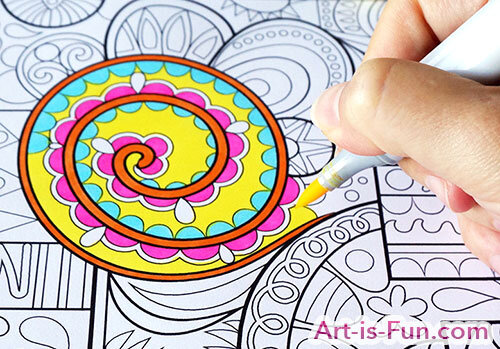
Not that long ago, markers were traditionally a niche tool used primarily past graphic designers and manga artists. Because markers are not as fade-resistant as other media, they were avoided past serious artists who had longevity in heed. Simply over time, equally artists began to brand art for the internet, more and more artists became attracted to the fantastic versatility of markers and their wide range of bright colors.
Markers are affordable, user-friendly, don't brand a mess, work well with other media and allow y'all to use bold colour quickly and easily! What's not to beloved?!

All kinds of artists have found a utilize for markers. Because they're easy to use and dry quickly, markers are great on-location or outdoors - perfect for travel, plein-air studies or urban sketching. Their effortless awarding of color makes markers well-suited to doodling, sketching and gesture-drawing. Markers can also blend smoothly, making them capable of photorealism, abstraction, and everything in between!
Markers have too experienced a huge surge in interest these past few years thank you to the adult coloring tendency. Colorists love the wide range of color choice and the convenience of unlike tip shapes. This demand has triggered an explosion in the number of marking products on the market place. This abundance of choice means that there's a mark out there for every artist and cost point. The hardest office is wading through all the dissimilar options to figure out which suits you best, but I'm here to assistance yous with that!

Tip Shapes
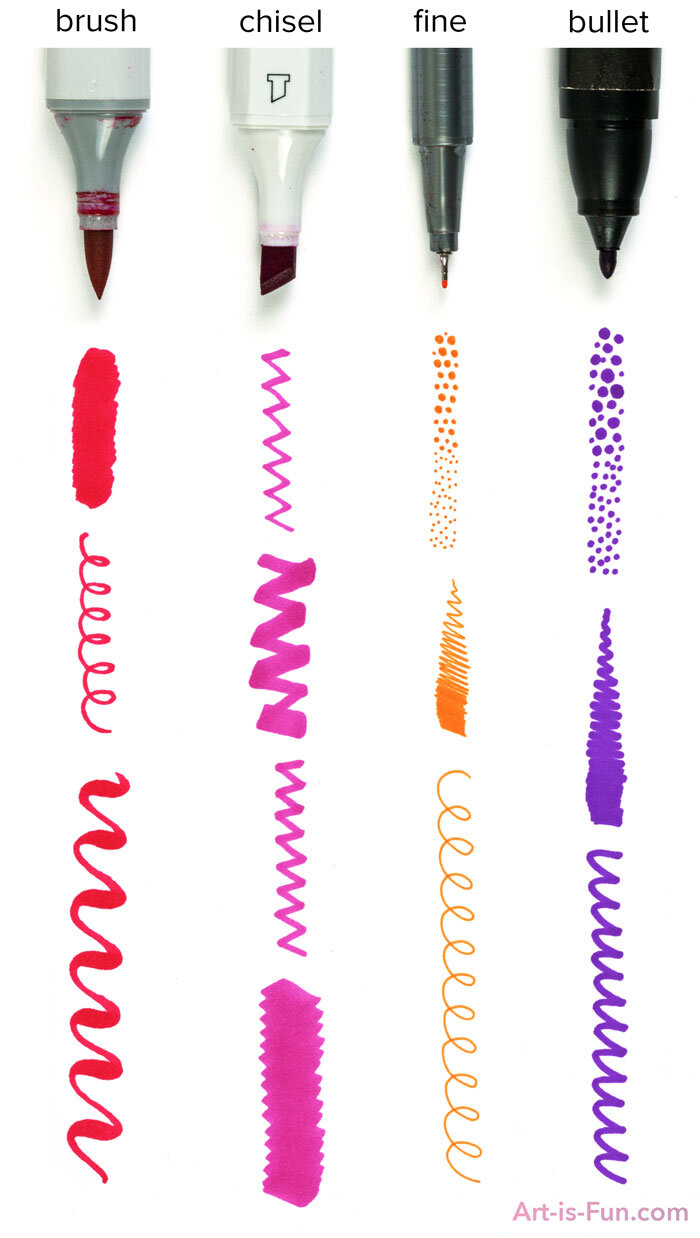
Before we dive securely into the different brands, y'all'll get-go need to decide what type of tip shape or nib you want, because the tip shape greatly impacts your experience of coloring. Here's an overview of your options. Note that these terms are not standard across brands - for example, some manufacturers volition use the phrase "fine tip" to refer to a tip that'south more similar to a bullet tip.
Brush Tip
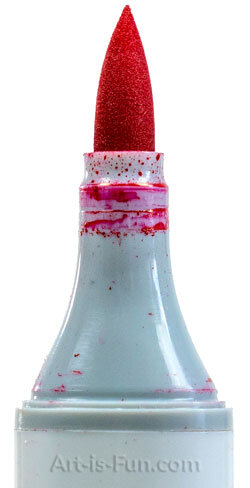
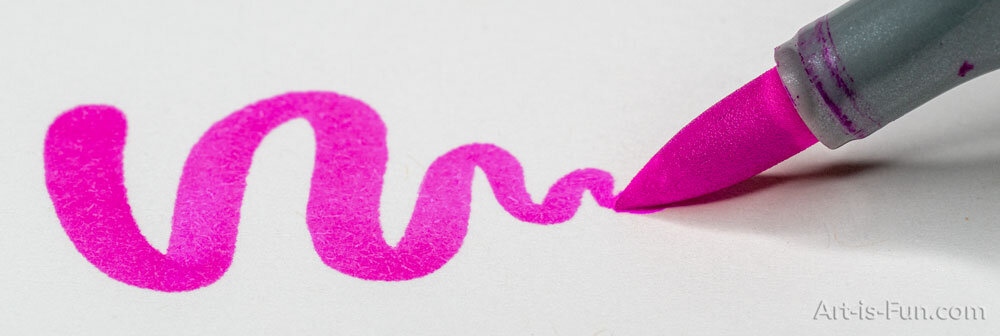
Castor tips (aka "brush pens") are my absolute favorite because they're the most versatile. The point tin be used to create thin strokes (perfect for detailed piece of work) and the brush tin can too be flattened to make full in big areas. Yous tin as well employ the brush tip to create variable-width strokes. Brush pens are typically more expensive than other types, just for some brands the tips can be replaced when they become worn.
Chisel Tip
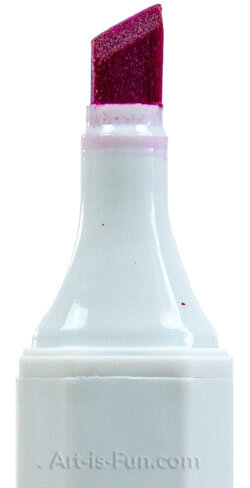
The chisel tip is very common across brands. It'south useful because you can utilise dissimilar edges for dissimilar purposes. The wide, flat side is great for laying down lots of color, while the pointy side is good for thinner strokes (but non as thin or precise as you can achieve with brush or fine tip markers). To exist honest I rarely utilize the chisel tips on my markers, just that'southward just me - your needs and mode may be different!
Fine Tip
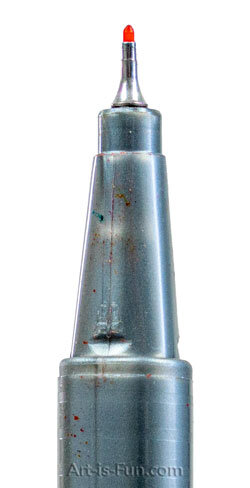
This is just like what you'd find on a technical pen that architects use. These tips are fantastic for fine details and patterning, only very impractical for larger blocks of colour.
Bullet Tip
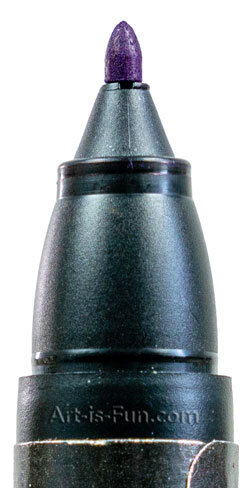
The trusty bullet tip is common in lots of cheaper marker sets. It's a good generalist tip, but isn't very versatile, in that super-fine details can be tricky and filling in large areas with color can be dull and tedious.
Double-Concluded Markers

Double-ended markers are a perfect way to savor the best of both worlds! They feature a central ink reservoir with tips on either end. It's common for loftier quality booze-based markers to be double-ended, most commonly with a castor tip and chisel tip at either end, although some accept a bullet tip (instead of a castor tip) with a chisel tip at the other end.
Stroke Examples
As you can see in the image below, you can achieve a multifariousness of strokes with any marker tip, which is pretty cool! However, each tip type has its strengths and weaknesses, so the all-time marker tip for you ultimately boils down to personal preference and the type of art you wish to create.
I often use the Copic marker brush tip to create unabridged artworks, but the cool thing about markers is that they tin can exist combined, and then you don't need to practise an entire artwork with the aforementioned tip or brand. Mix and match as you encounter fit. For instance, y'all can lay down large blocks of color with a brush tip or chisel tip, and then add details on top with a fine or bullet tip!
Water-based markers vs. Alcohol-based markers
The adjacent biggest choice you'll have to make is whether you want to purchase water-based markers or alcohol-based markers.
Markers incorporate dyes that are suspended in either water or alcohol, which dries and leaves the color backside. This difference - whether the dye is suspended in h2o versus booze - can affect everything from price to blend-ability and permanence. Here'south a quick rundown of how the two types differ:
Water-based markers
-
Cheaper
-
Fewer colors
-
Usually disposable
-
Poor fade resistance
-
Dries less quickly
-
No odor
-
Widely available
-
Tin warp paper
-
Can be re-activated with water, creating washes.
Booze-based markers
-
More expensive
-
More colors
-
Some are refillable
-
Better fade resistance (but not lightfast)
-
Dries quickly
-
Can have an aroma
-
Establish mostly in fine art supply stores
-
Can bleed through paper
-
Has transparency, and so colors can be layered.
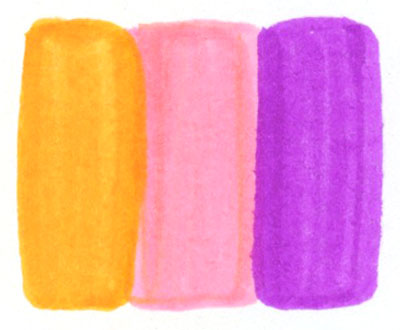
Light streaking from a water-based marker
Retrieve using Crayola markers when yous were a child? If so, and so you're already familiar with water-based markers. Water-based markers are widely available in cheap, student-grade sets designed for kids, made from lower-quality dyes designed to be easily washable from hands.
However, h2o-based markers aren't simply for kids - at that place's a whole range of water-based markers out there that are specifically made for professional person artists and gorging hobbyists, which can make them just as practiced as alcohol-based markers, depending on your intended purpose. Artist-quality markers of both types (h2o-based and alcohol-based) will typically incorporate higher-quality dyes than their cheaper counterparts.
And so which are better: water-based or alcohol-based markers?
Once yous decide to take the spring from Crayolas to artist-course markers, it tin can be hard to decide between water-based and booze-based markers, so I suggest that you might want to do what I did when I offset started using creative person-quality markers, and try them both. Every bit helpful as information technology tin can exist to read near markers online, information technology's important to endeavor them yourself to get a firsthand understanding of how they work, which which will help you lot decide which ones you adopt using. Thankfully both types of markers are available open stock (singles) or in small sets, and then you tin can try some out without breaking the bank!
Here'south a little summary between these ii options:
Water-based markers are available everywhere, almost normally in those cheap sets designed for children, but you can also buy artist-quality h2o-based markers that are amazingly versatile. Because water-based markers don't drain through the paper every bit much, they're well-suited for utilise in coloring books. The major downside is that if you lay downward too much colour, they can warp or damage the paper. Water-based markers are also extremely popular for hand-lettering.
Alcohol-based markers (sometimes called "permanent markers") are typically the preferred choice of artists because they blend more smoothly and predictably (see below), and you lot can create shades, tints and ombrés by overlaying colors. They do tend to bleed through the paper, so double-sided coloring books are not platonic. For more info, check out Tips for Using Alcohol Markers in Coloring Books.
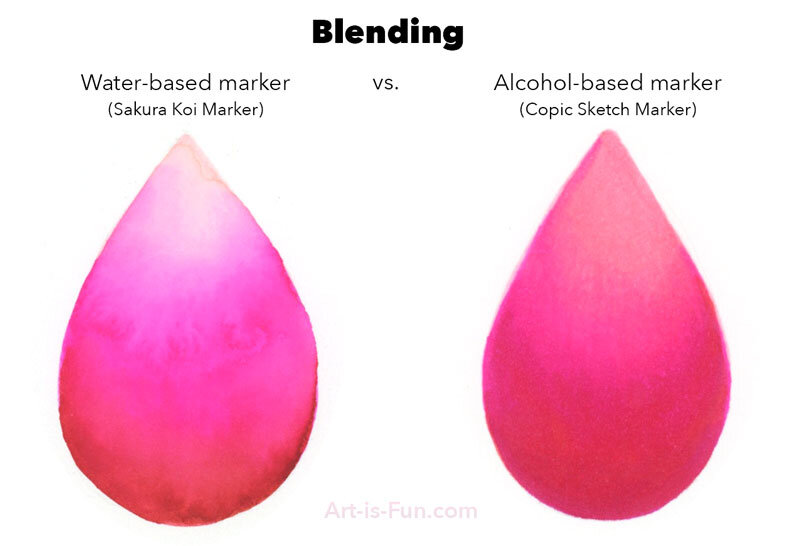
The prototype below is a comparison of how well h2o-based and alcohol-based markers lay downward color. These are relatively big 3-inch circles on cardstock. Every bit you can see, h2o-based markers tin can exist streaky when the colors are overlapped to create a solid make full. While alcohol markers don't appear every bit streaky, they tin accept some variations in saturation, with some areas appearing slightly lighter or darker than others. Whether yous dearest or loathe these attributes depends on your personal fashion - for example, some people (like me) appreciate the subtle variations in booze markers because it lends the artwork a more natural, organic feel, whereas I get frustrated by the streakiness of water-based markers when trying to make full large spaces.
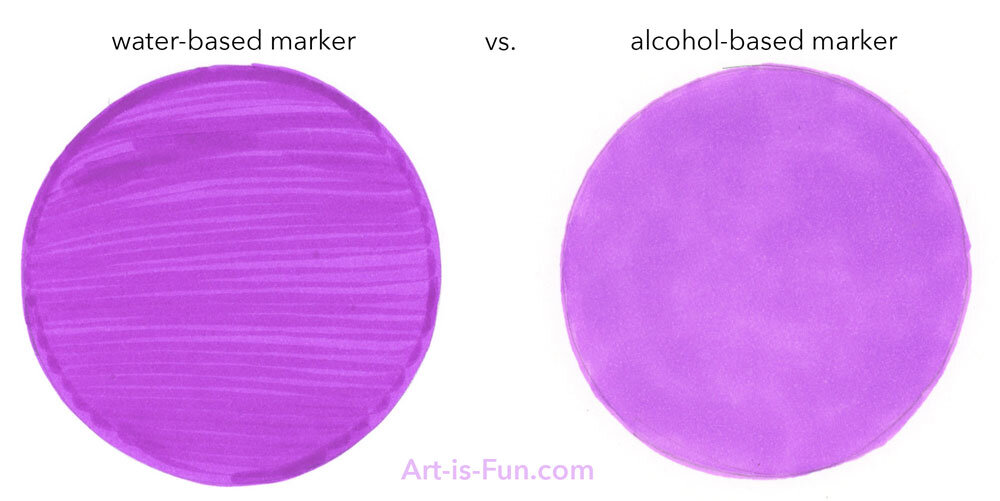
A comparison of how well h2o-based and alcohol-based markers lay down colour on cardstock.
If you're in a store and thinking of buying some markers simply can't figure out if they're water- or alcohol-based, pop off the hat and gently smell (some tin be pungent, so exist cautious). If there'south a strong odor, they are alcohol-based markers.
Color Range
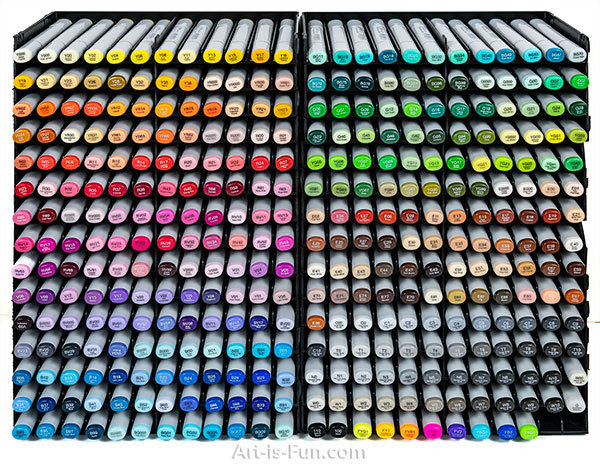
Color range is important considering it helps you lot accomplish improve tonal gradation with your blending. This is considering you're able to utilize a range of like tones to blend 1 color into another, creating a nice smoothen transition.
Alcohol-based markers offer the widest colour range, and tin can oftentimes be purchased open stock (one at a time). Hither'southward my collection of the total range of Copic Sketch Markers, consisting of 358 colors! To be honest, however, I nigh never need that many colors, and then don't feel like you absolutely demand to get them all to make great art.
After you've bought markers, it'south a proficient idea to create a color chart to apply as a reference. Here's a template that the company Copic created for their markers. I utilise this every bit a handy reference whenever I'm making art with my Copics. Hither's my completed version:
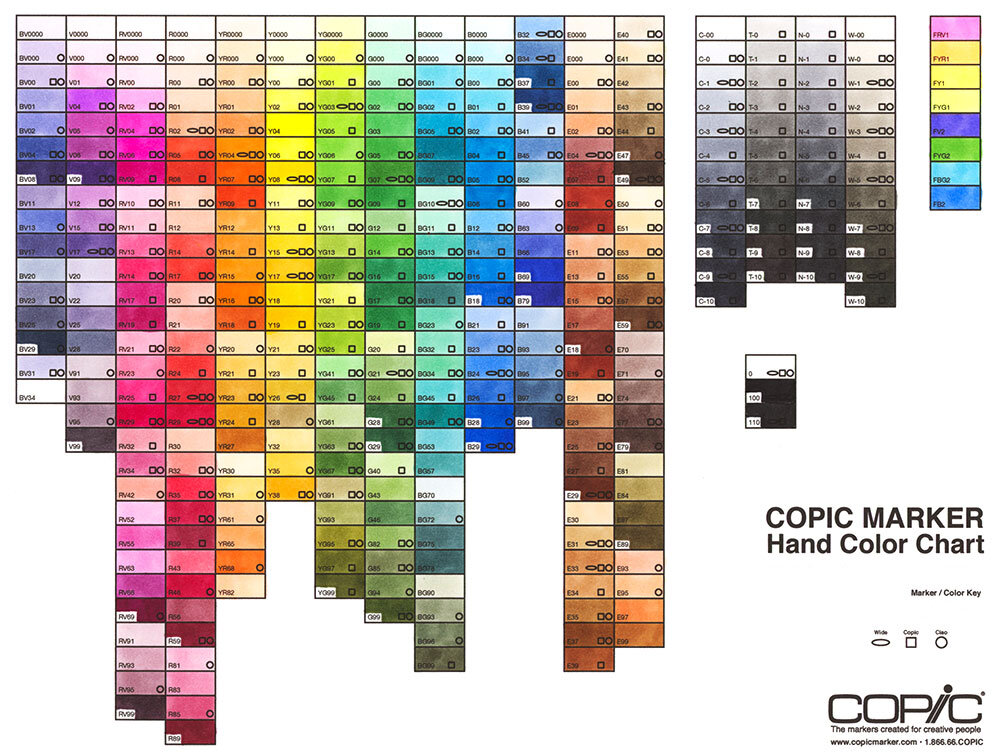
If you lot'd like to learn more about Copics, including the different products they offer, cheque out my extensive review of Copic Markers.
Blending
When making fine art, the ability to create smooth blends tin brand an artwork really come to life. The result can await so stunning and professional that you wouldn't even recollect it was fabricated with markers!
Hither's an example from my Holiday Cheer Coloring Book that I colored with Copic Sketch Markers. I employed blending in merely about every chemical element, especially to bring out the highlight on the hat!

Both water-based and alcohol-based markers are capable of blending, but each has its ups and downs. Notation that blending performance is heavily reliant on the paper you lot're using. For instance, I've establish that alcohol-based markers blend fantastically on mark paper, but when I tested them on heavyweight multimedia paper it was difficult because the newspaper was too absorbent. I'm currently developing a separate article to exam a range of markers on different types of newspaper - stay tuned!
Blending with h2o-based markers
-
H2o-based markers can leave streaks when you're blending, and create unwanted darker areas when you accidentally layer strokes.
-
Excessive blending can can too warp or damage paper, which is why you lot should utilize watercolor paper (because it'southward tough) or marker paper, which is less absorbent, thereby allowing you more than time to blend. (That said, water-based markers can tear or pill only about whatsoever type of paper, including watercolor paper and marker newspaper, depending on your technique.)
-
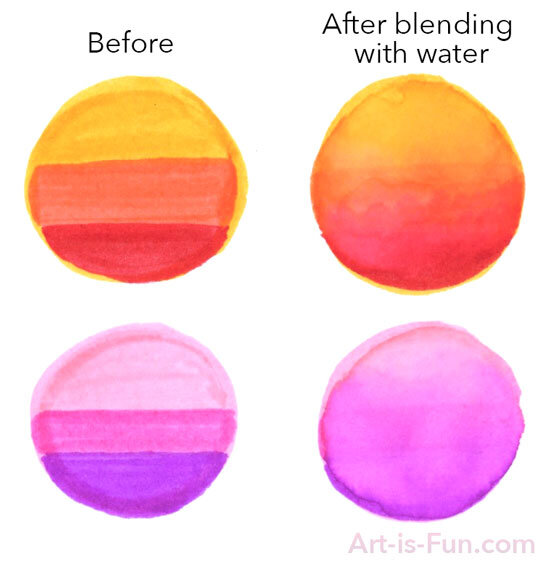
Water-based markers tin can exist re-activated afterwards they've dried, which allows you to lighten them with water or create washes (but the downside is you might accidentally ruin an area you'd already finished by getting it moisture).
-
Blending with water-based markers can be more than unpredictable than blending with alcohol markers because water can react with the dye in unexpected ways that tin be difficult to control. While some may notice this frustrating, information technology'southward a trait that many watercolorists appreciate, then if you've got experience with watercolor pigment, your skills volition transfer well to blending with water-based markers.
-
You can also dip the tip of your mark in water to create a smoothen transition in tone and saturation (from light to nighttime).
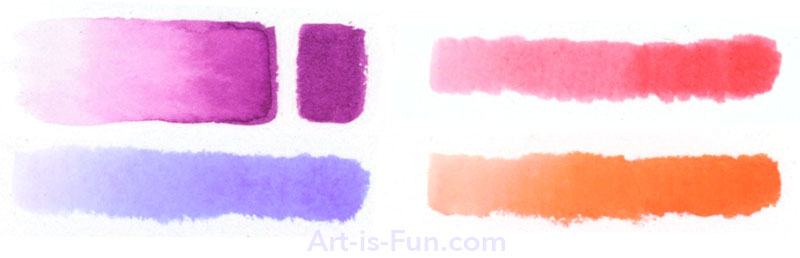
Creating washes with h2o-based markers
Blending with alcohol-based markers
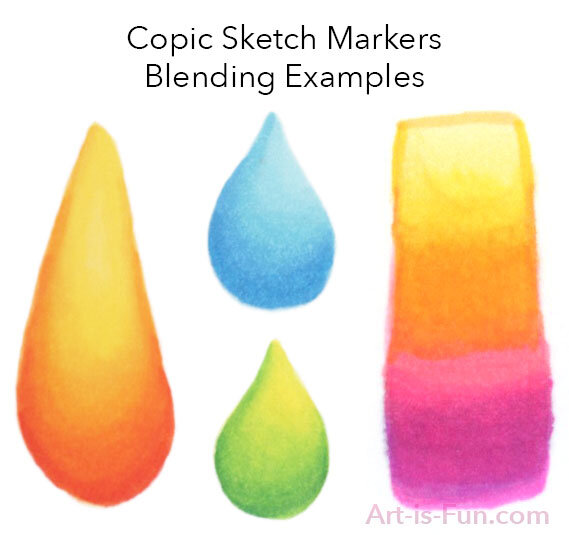
-
Booze-based markers, on the other hand, blend more than smoothly, but because they dry very quickly, you lot have to move fast. And once they're dry, that's information technology - the colors are very difficult to remove and whatsoever boosted blending will darken or alter the existing colors. These qualities tin can make information technology difficult to smoothly cover large areas with alcohol-based markers or create big gradients (but it'due south perfect for smaller areas).
-
Because alcohol markers are partially transparent, you tin layer colors on meridian of one another to create different shades or tints.
-
Blending with alcohol markers is more predictable than blending with h2o-based markers, in that you know how the colors volition interact so it'due south pretty piece of cake to replicate previous blends.
-
One downside with alcohol markers is that they can bleed through the newspaper. For this reason, I similar to use my Copics on thick cardstock or marker newspaper. Just if you're planning to use them in coloring books (virtually of which have thin paper) you should put some bit newspaper behind the page you lot're coloring (or gently tear the page out and then color it on top of scrap paper) so that the dye can't stain other pages.
A fantastic feature of all markers is that you can mix dissimilar marking types and brands, and fifty-fifty combine them with other media like colored pencils. If I'm not happy with how I've composite some colors or I've got some streaking, I become over the surface area with Prismacolor Colored Pencils to polish out those imperfections.
In the image below (a section of one of my coloring pages), I used Copic Sketch Markers for nearly of the piece of work, but then used Prismacolors to better the shading and details on her face and hair.
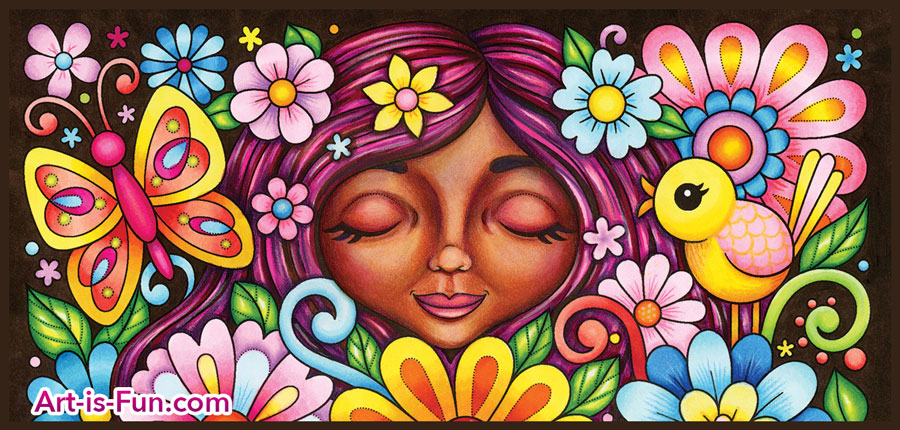
Using Prismacolor Colored Pencils with markers
Some mark brands come up with blenders, which are basically markers filled with solvent and no dye, so they're "clear" and colorless. Despite the proper name, these tools aren't actually used for blending. Rather, they're good for lightening areas of your artwork and adding highlights. They're also useful for fixing mistakes and blending from color to white. Copic'due south Colorless Blender tin can be used with alcohol-based markers and Tombow'southward N00 Colorless Blender Pen can exist used with water-based markers. I have both just I personally don't use them much.
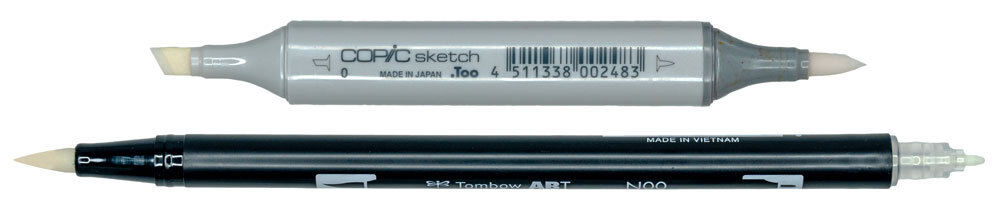
Copic and Tombow Colorless Blenders
If you're interested in learning more than about blending, bank check out this Skillshare course: Blending with Water Based Markers, available with their 14-day free trial (if you lot sign up I become a committee that helps support this site).
Tip: if the nib becomes muddied, just scribble on a bare scrap of paper until it's clean. This works for both water-based and booze-based markers!
Lightfastness
All art media will fade over time as calorie-free, oxygen and humidity gradually suspension the chemical bonds of the molecules that produce the color. The ability to resist color fading is called lightfastness. If you're creating artworks that you hope to preserve, it's a good idea to discover media classified as lightfast or archival, which tin concord their color for decades. Just beware, you can't e'er trust these labels.
As I've already mentioned, markers become their color from dye, which is more susceptible to fading than the pigments you'd find in paint, pastels or pencils. For this reason, the vast majority of markers are non truly lightfast (for case, "permanent" markers will as well fade).
If you brand a purchase via the Blick links below I receive a pocket-size commission, at no actress cost to you.
If y'all're especially concerned almost lightfastness, but yet want the convenience of markers, cheque out Winsor and Newton's Pigment Markers and Watercolor Markers, both of which contain paint rather than dye. You could also consider Faber-Castell's Pitt Artist Pens, which contain pigmented India ink that is more fade resistant than dye (simply unlike other h2o-based markers, these pens are permanent and waterproof afterwards they're dry).
Bottom line: your marking art volition fade more quickly than other media. To illustrate, here'south an example of an artwork I created 2.five years ago using Copic Sketch Markers. The second image is afterward information technology spent 2.v years on my fridge, being exposed to daily indirect light.
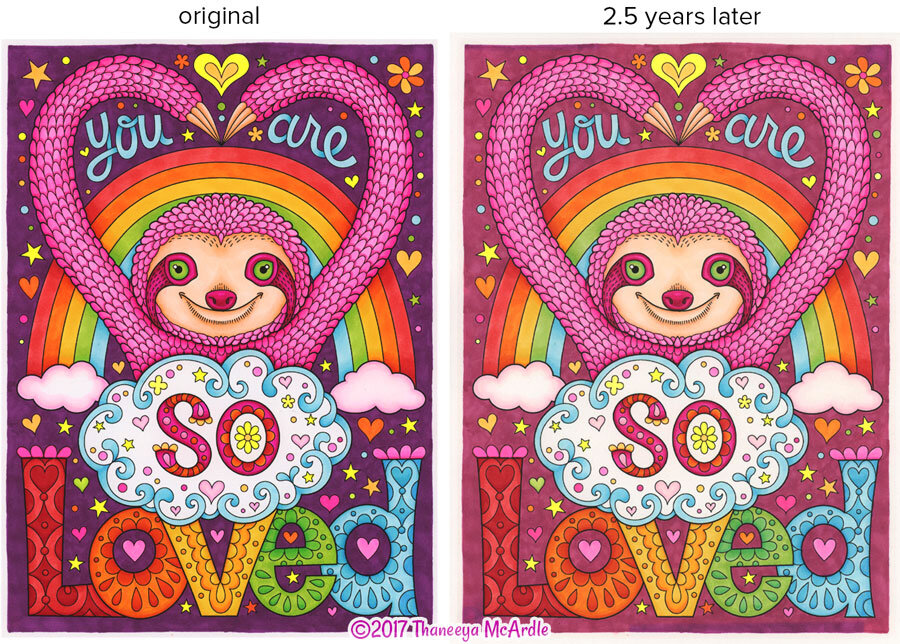
Note how much my markers faded over the course of 2.v years on my fridge. Most colors expect surprisingly good just that dark purple background really faded!
There are some steps y'all can accept to ho-hum color fading:
- Prioritize alcohol-based markers because they contain amend quality dyes and are more than lightfast.
- Store your marker art abroad from directly sunlight or framed under UV-filtering drinking glass. I shop my marker art in archival boxes, and even later on a few years, in that location'south very picayune fading.
- Y'all can also treat the finished artwork with a product like Gilded Archival Spray Varnish, only you must test it get-go because it can hands ruin an artwork. It's important to wait several hours for the markers to set, because if y'all spray it as well soon, the spray varnish can cause the colors to run. Information technology can too darken your artwork or add a particular sheen that changes the wait, so it'southward all-time to test it out on some marker doodles to see what happens.
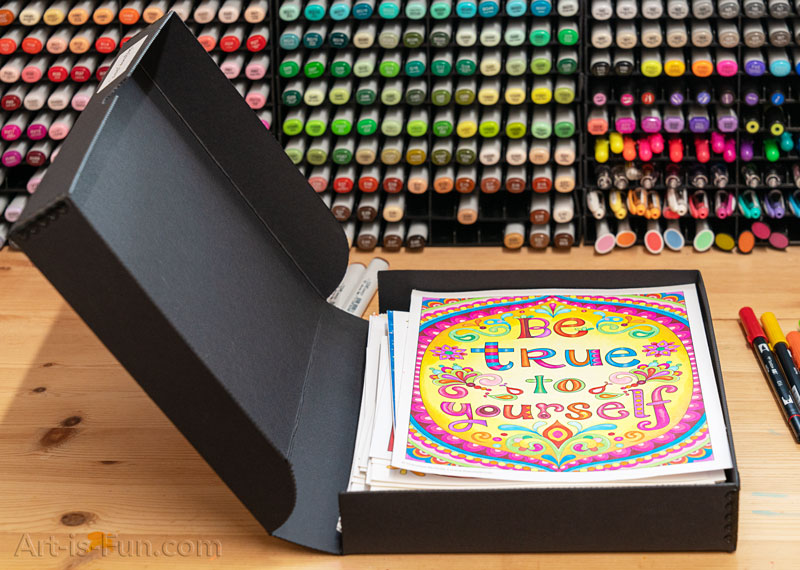
I protect my coloring pages in an archival box
Whether lightfastness is an event for yous depends on your workflow. These days, I create virtually all of my art for the purpose of licensing and publishing rather than selling originals. As soon as I've finished a slice, I scan information technology at 600 DPI and and then information technology'southward preserved in my digital backup organization. If you're planning on displaying your work, yous can create prints from your digital scans and it will look then similar to the original that no one will hardly know the difference (just be sure to market them equally prints if you lot intend to sell them or display them publicly)!
Cost
Alcohol markers are typically more expensive than water-based markers. But for the price bump you get better quality dyes, smoother blending, more colors, and the cost-saving ability to refill your markers and replace damaged tips.
I'1000 not going to listing prices here considering they tin can vary widely from the list price, with Blick often offer steep discounts that can fluctuate. In general you can get Sharpies for nearly a dollar a piece or less, only for artist-quality alcohol markers, expect to pay between $3 to $7 per mark (less if yous get a ready).
Most water-based markers, on the other paw, cannot be refilled and the marker has to be thrown away when information technology runs dry or the tip becomes damaged. But if yous're on a budget, yous can still choice upwards some artist quality markers for between $2 to $five each.
The Best Markers
I've provided links below to the relevant products so that you tin easily find them on Blick Fine art Materials, my favorite art supplier. If you make a buy after clicking on one of these links, I'll receive a minor commission (at no actress cost to y'all). Read my disclosure statement to learn more than.
When buying art supplies I prefer to shop from Blick because you know you lot'll become authentic products from respected art brands. Buying from Amazon can sometimes be a mixed bag because many products are sold by tertiary-party sellers who might sell faux products of questionable quality or fifty-fifty counterfeit products disguised as name brands. Thankfully that's never a problem when buying from an established art supplier like Blick!
The All-time Alcohol-Based Markers
My overall pick are the Copic Sketch Markers. As I mentioned, I have the consummate prepare of 358 colors and I have been using them to create colored art for my books since 2014. Although they're amongst the most expensive markers you lot tin can buy, you tin refill them and modify out the nibs, so they'll last a lifetime.
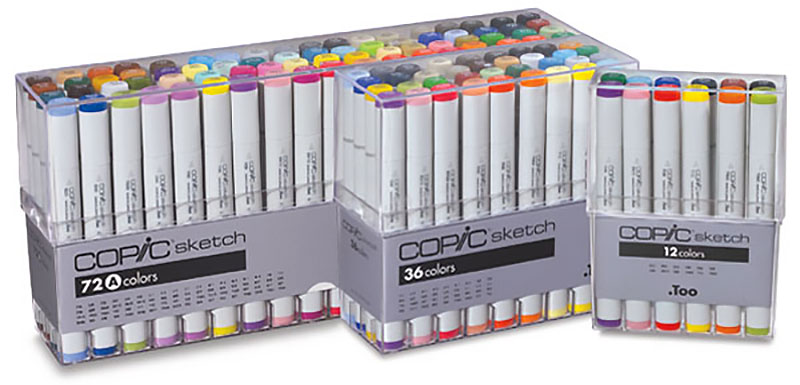
You can often relieve money by buying them in sets. I acquired all 358 colors gradually over the course of 1-2 years - there's no demand to rush and purchase all of them at one time (unless you tin can afford it and desire to). I similar that Copic Sketch Markers are double-ended, with the castor tip on one end and the chisel on the other. Read above to learn nigh how well they perform when information technology comes to coloring and blending. To learn more than, check out my extensive review of Copic Markers.
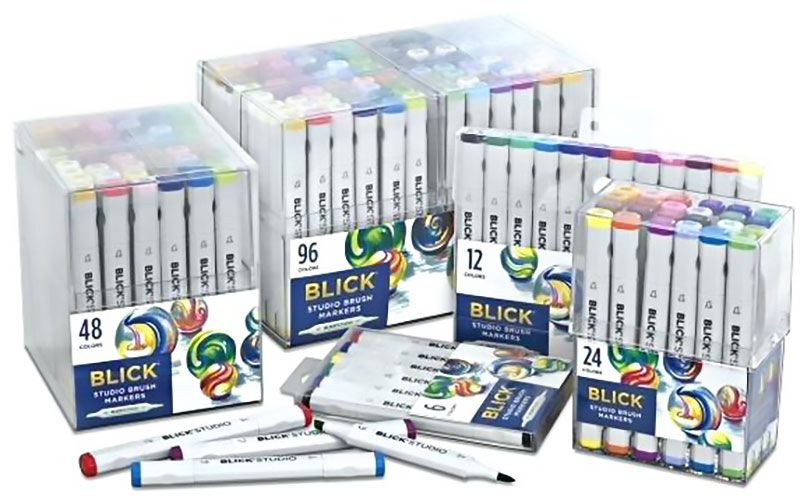
My budget selection for professional person-quality booze markers are the Blick Studio Brush Markers. They're very similar to Copics (they're refillable and the brush and chisel nibs can exist replaced), but cost $3 less per marker than the Copic Sketch! I've tested them myself, and it's honestly difficult to tell the difference! They tin't compete with Copic Sketch's color range, but you still get 143 colors plus a colorless blender – more than than plenty.
For those of y'all on a tight upkeep who are cracking to try out alcohol markers, Ohuhu booze brush markers (shown below) are my ultra-budget pick. They're even cheaper than Blick Studio Markers but I would hesitate to call them "professional-quality" considering (at the fourth dimension of this writing) they're not refillable, the nibs aren't replaceable (and tend to fray much more quickly than the pro-level markers) and they're only bachelor in sets (whereas Blick and Copic Markers are available individually). However, for beginners and hobbyists looking for an introduction to alcohol markers, they're a great purchase! Plus, Ohuhu is considering offering refills and selling their markers individually, so they are certainly a company to watch if those factors are important to yous. Read my in-depth review of Ohuhu booze brush markers to notice out if they're correct for you!

Another excellent ultra-budget choice are Arrtx Markers (shown below), which are a practiced choice if yous prefer the bullet/fine tip over the brush tip that comes with the other products mentioned above. Like the Ohuhu markers, they aren't refillable and the tips aren't replaceable, but they come with a handy carrying case with an individual slot for each marker. Read my detailed review of Arrtx Markers to acquire more!

The Prismacolor Premier Double-Ended Art Markers have a lot going for them: reliable make, huge range of colors (200 + blender), they're available in open stock, and they cost less than the Copics. Withal, they're not refillable and the nibs can't be changed out. They're double-ended, but only with the chisel & bullet or fine tips (no brush tips). I strongly favor the brush tip, but if yous don't, these should be high on your list.
The Best H2o-Based Markers
My overall pick are the Zig Fine art & Graphic Twin Markers. They're double-ended (brush and fine bullet tips) and offer an impressive 80 colors. The nibs can't be changed out and they're not refillable, simply they're adequately cheap for existence artist-quality (effectually $3 per mark) and even less if you lot buy a gear up.
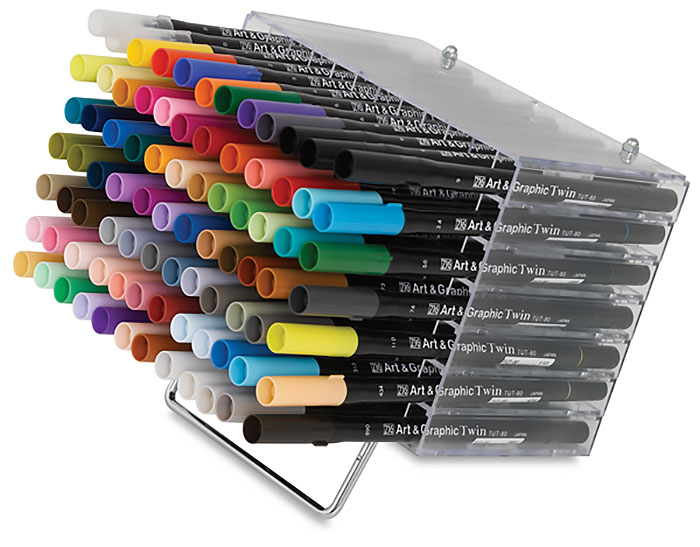
The production beneath is available on Amazon. Equally an Amazon Associate I earn from qualifying purchases.
My upkeep option are the Akashiya Sai Watercolor Brush Pens. I don't know much about the brand and they only accept a color range of 30, but I but had to recommend them because they've been a joy to use and they're cheap. I got the set of 20 because they were on sale, and I immediately loved the flexibility and smoothness of their brush tip. The color glides off the nib and their blending capabilities are amazing for the price. Every bit I write, the xx-color set is around $twenty-thirty and the 30-colour set is $l.
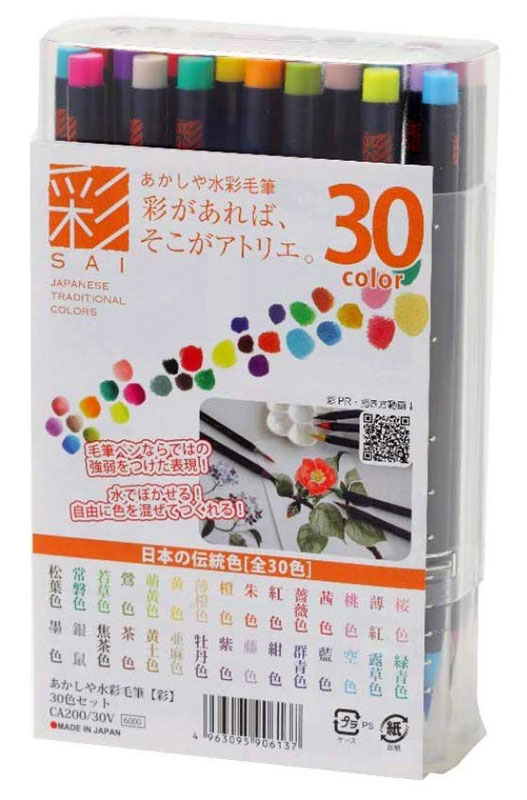
I also recommend the Sakura Koi Coloring Brush Pens, but they lost out to the Zig markers considering they offering fewer colors (48 vs 80). I also like the Tombow Dual Castor pens, but despite their superior color range (108 colors), they lost out because they didn't seem to alloy too and the castor tip was a bit stiff and as a result, tore nigh every paper I tried to blend them on. The Faber-Castell Pitt Creative person Pens come from a reliable make, and contain pigmented India ink (which is more lightfast), but I found that they didn't alloy every bit well equally I would have liked. I tin can see why they're popular with people who like hand-lettering though.
Source: https://www.art-is-fun.com/markers
0 Response to "Cool Small Drawings With Highlighters"
Postar um comentário